The hypodermic model is used as a communication which is intended message and directly received and accepted by the receiver. In that year the model was around in the near early 1920's to 1930's and that is considered obsolete in today's generation. It had some direct and immediate effect on some of the audiences with the mass media in the 50's it had a huge impact and shown influence of the behavioral changed.

The "hypodermic needle theory" implied mass media had a direct, immediate and powerful effect on its audiences. The mass media in the 1940s and 1950s were perceived as a powerful influence on behavior change.
Several factors contributed to this "strong effects" theory of communication, including:
- the fast rise and popularization of radio and television
- the emergence of the persuasion industries, such as advertising and propaganda
- the Payne Fund studies of the 1930s, which focused on the impact of motion pictures on children, and
- Hitler's monopolization of the mass media during WWII to unify the German public behind the Nazi party
This put a fast and useful and powerful rise on television and radio which was around the world war back in the time. It was also the birth of advertising the propaganda, before around on the rise on radio and television you had some latest changes on the rise of both mediums, you saw the rise on advertising on selling different types of products and get people in the mass media on getting sided.
Inoculation Model:
We have discussed several ways in which others can change our attitudes and even our behavior. As it frequently occurs without our knowledge, it can be scary to think about how easy it can be to manipulate us. The good news is that there are ways for us to resist persuasion. Several studies have found that simply being aware of the possibility of an upcoming attempt at persuasion makes us less susceptible to that attempt. For example, one reason that product placement in a TV show or movie works is because people do not realize that someone is trying to influence them. If we are aware of the use of product placement as advertisement, we are likely to avoid attitude change as a result of this awareness. An even more effective method of resisting persuasion that expands upon simple awareness of persuasion techniques is attitude inoculation the subject of this lesson.
Attitude inoculation is a technique used to make people immune to attempts to change their attitude by first exposing them to small arguments against their position. It is so named because it works just like medical inoculation, which exposes a person's body to a weak version of a virus. The weakened virus triggers the production of antibodies in response, but it is not strong enough to overwhelm the body's resistance. Later, when exposed to the full virus, the body knows what to expect and is better able to resist than it would have been before the inoculation. Attitude inoculation, then, exposes a person to a weak logical argument that is contrary to their preexisting attitude. This triggers the creation of counterarguments in response. Later, when exposed to a strong persuasion technique that attempts to change their preexisting attitude through logic, the individual already has arguments to use in defense.
These showed some very good examples and description on what they discussed and show the attitude to inoculation and talked about our behavior and as we think as a human being and showed and talked about resisting, manipulate, persuasion. And then talked about the attitude on inoculation and described about different types of arguments and what triggers the body resistance and that is sometimes explained to maybe use as a defense as an individual or maybe the body is sometimes expose as a weakness to show the person.
Inoculation theory is sometimes very weird on how they get people in their industries to trick the public on buying different types of products it has a reaction to the human body to respond to that and believe what they say on whats advertised and some people in the public do believe that and say '' it works '' in their adverts and makes people buy more.
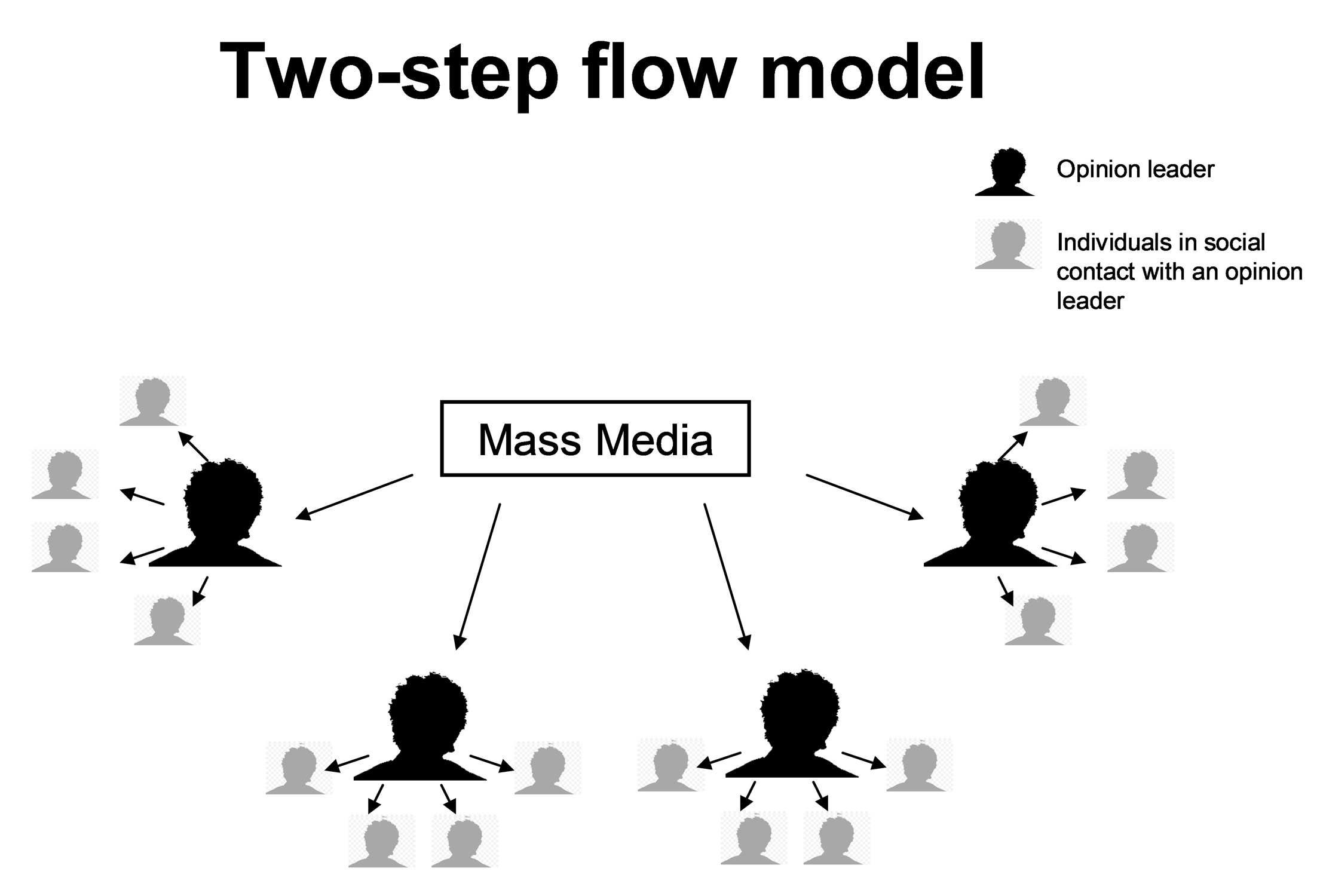
Two-Step Flow Model:
This type of theory involved a first type party and passing on different information that they have received from the media and their own perspective on to their friends and family and this could spread around to their family and friends. The ideal thing for this is how the media spreads really fast on just saying word from your mouth and this makes people from the public to believe. This is a very powerful way to spread information without needing to do much effort. For example let's say you said to a very influential person that this product is the thing you need to solve your problems and on how it's very good for you, he would then believe that and tell other people that he knows and spread this to make it even more true.

http://communicationtheory.org/wp-content/uploads/2012/07/two-step-flow-of-communication.jpg
Uses and Gratifications Theory:
This is more of a popular approach on understanding a mass communication in the theory place this emphasis a consumer more than a simple message itself and it's a lot more of what people do with it. It assumes members of an audience that are not passive but in fact trying to integrate the media on their lives. It also says a consumer is responsible on choosing which media for their needs is best. There are so many ways for this theory and how to apply it on, in the modern day we use social media for research or the web like google, youtube, this forms of media to research about maybe a video which tents to be comedy or music video this has many ways to connect to a lot of things.

Reception Theory:
This theory is when the producers or some directors of maybe a series or movie construct a text and encodes with a hidden message or meaning to get the audience more think and interested, if this is done to a good and right standard these messages will be able to pick up relatively quickly and reminded of whats said in the message throughout a film. This could be done by actions in a film, the dialogue from a character, These are the types of audiences defining the messages to show that they are negotiated or oppositional.
Stuart Hall identified three types of audiences reading messages.
1) Dominant
2) Negotiated
3) Oppositional
Dominant is about what the audience wants to hear from people and agreeing, but with limited knowledge on the subject. One example is political speeches where politicians say what the public want to hear, like improvements to the NHS and improving public transport.
Negotiated is when the audience agrees, disagrees or questions a political speech or news broadcast due to previously held news, as many people in America question FOX news as it has been seen in the past as a biased news outlet who support the Republican party.
Oppositional is when the audience recognizes the Dominant message but rejects it due to culture or political opinion, as people actively rejects any political speech from a party on any subject and acts as the opposition. When the audience is in this state you can’t get any message across to them, as they have already made up their mind on a person or subject.
(Slide show explaining what Reception Theory is and examples) http://www.slideshare.net/EssexDaggerBC94/the-reception-theory


No comments:
Post a Comment